

Similar to any traditional invention, the roots of the scale date back to antiquity. Man's need to know exact things has been the reason for the evolution from primitive balances to high-precision scales.
Similar to any traditional invention, the roots of the scale date back to antiquity. Man's need to know exact things has been the reason for the evolution from primitive balances to high-precision scales.
The first weighing apparatus was a balance used by the Egyptians in the fourth millennium BC. It had an extremely simple form, with the horizontal arm supported in the middle by a pivot and arranged on the sides, at equal distances, with two pans suspended by rope. Initially, this balance was used not only to weigh and compare various bartered goods, but also to determine the weight of gold dust that sellers sometimes received in exchange for goods. Although it was among the first models, the Egyptian balance had an accuracy of approximately 99%. The Egyptians were also the ones who introduced the concept of using weights to determine the mass of a product after balancing the scale.
CHANGE. Subsequently, this type of weight measurement was significantly improved by the Romans, from whom the "Roman steelyard balance" has been inherited since the first millennium. The new balance had, on one of the halves of the arm, a single calibrated counterweight that could be moved along the lever until it was balanced. The Romans were the ones who manufactured the balance so that the fulcrum portion was supported on a sharp pivot at the support end, to provide the most accurate swing when weighing.
This mechanism provided increased accuracy when small masses were weighed with the help of the balance. The support lever of the balances was made of agate for a long time, but this material was eventually replaced by corundum (a precious stone, formed from a natural oxide of aluminum, crystallized, almost as hard as diamond, editor's note).
The last half of the 20th century brought a true revolution. The digital scale appeared in the 1950s with the invention of the load cell. This contains metallic resistors in the form of very thin metallic foils. Under the action of a weight, these compress and change their electrical resistance, which is read by a microchip, interpreted, and displayed.
In 1500, the genius of Leonardo Da Vinci invented the first balance that indicated weight. The weight to be measured is placed on the pan, and the measuring scale functions as a pendulum and finds a new equilibrium position in front of a plumb line at the reading weight. This is also the principle by which the scales we encounter everywhere operate.
IMPROVEMENT. A very important change, which actually underlies the appearance of the modern analytical balance, occurred in the mid-18th century, when the Scottish chemist Joseph Black discovered a new technique for constructing a laboratory balance with a rigid, very light arm, supported on a pivot with a narrow edge, similar to a knife blade. The operating principle of the instrument was similar to that of a seesaw (like those found in children's parks). To avoid the need to handle very low mass counterweights, these scales were already equipped with an incorporated weight that could be moved along the arm to perform small adjustments. However, the action performed with the help of this balance was very easily affected by air currents and humidity, so the mechanical segments used were encased in glass. Balances of this type served laboratory work for 200 years, from 1750 to 1950. However, from 1948, the construction of scales was oriented towards those with a single pan.
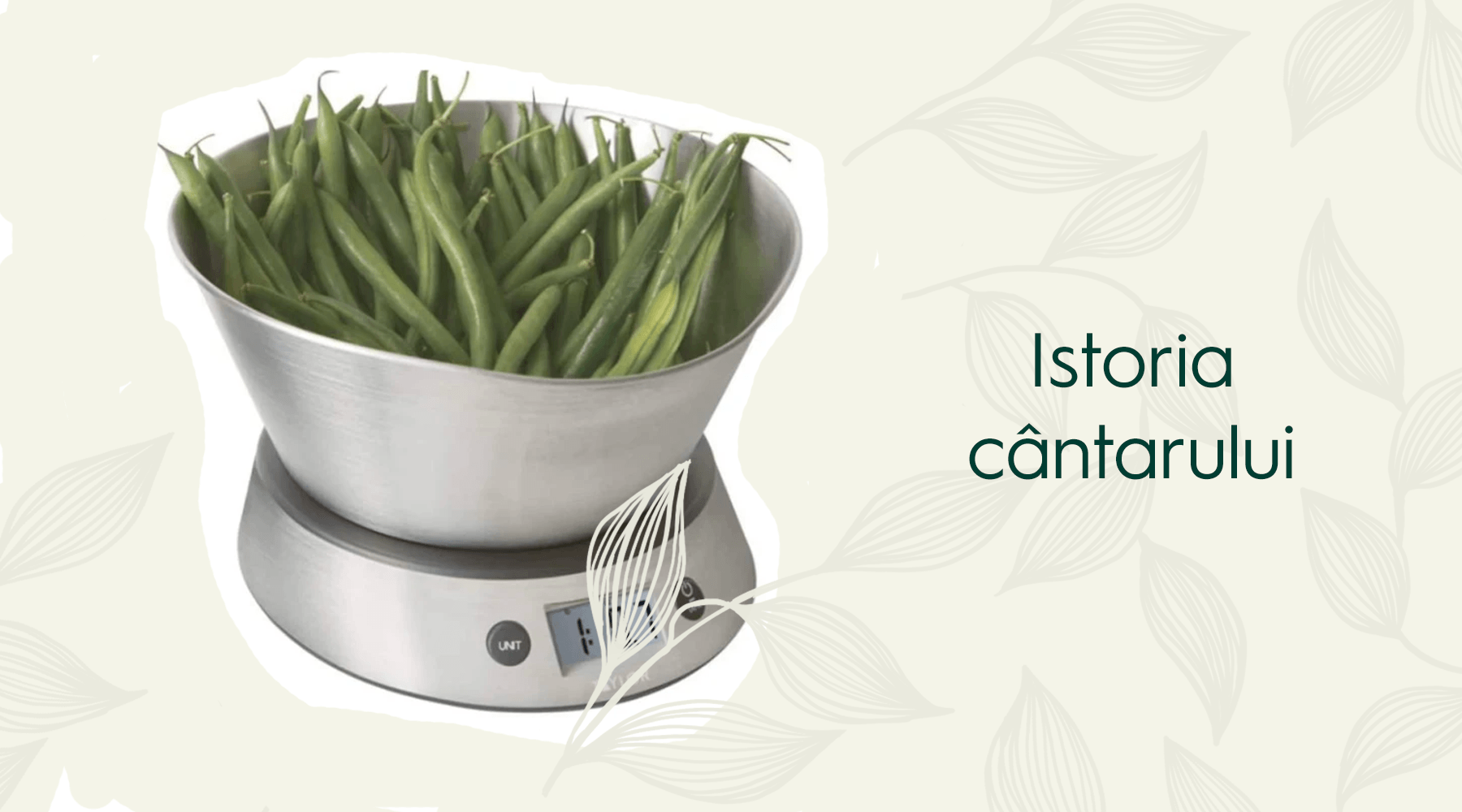
Accurate ingredient measurement is an essential factor for successful recipes, which is why the kitchen scale is an indispensable presence in European kitchens. In the US, graduated cups are preferred, which are less precise but easier to use when recipes are expressed in imperial English units of measurement. In Europe, quantities are usually expressed in the metric system, which makes the use of kitchen scales very practical.

Considering the wonderful history of this product and its importance in the kitchen and at home, we made sure to bring you the most precise scales and make them available to you.
Discover Taylor Pro brand products here.



Share:
Brunch: the meal from breakfast to dinner
How to prepare almond milk