

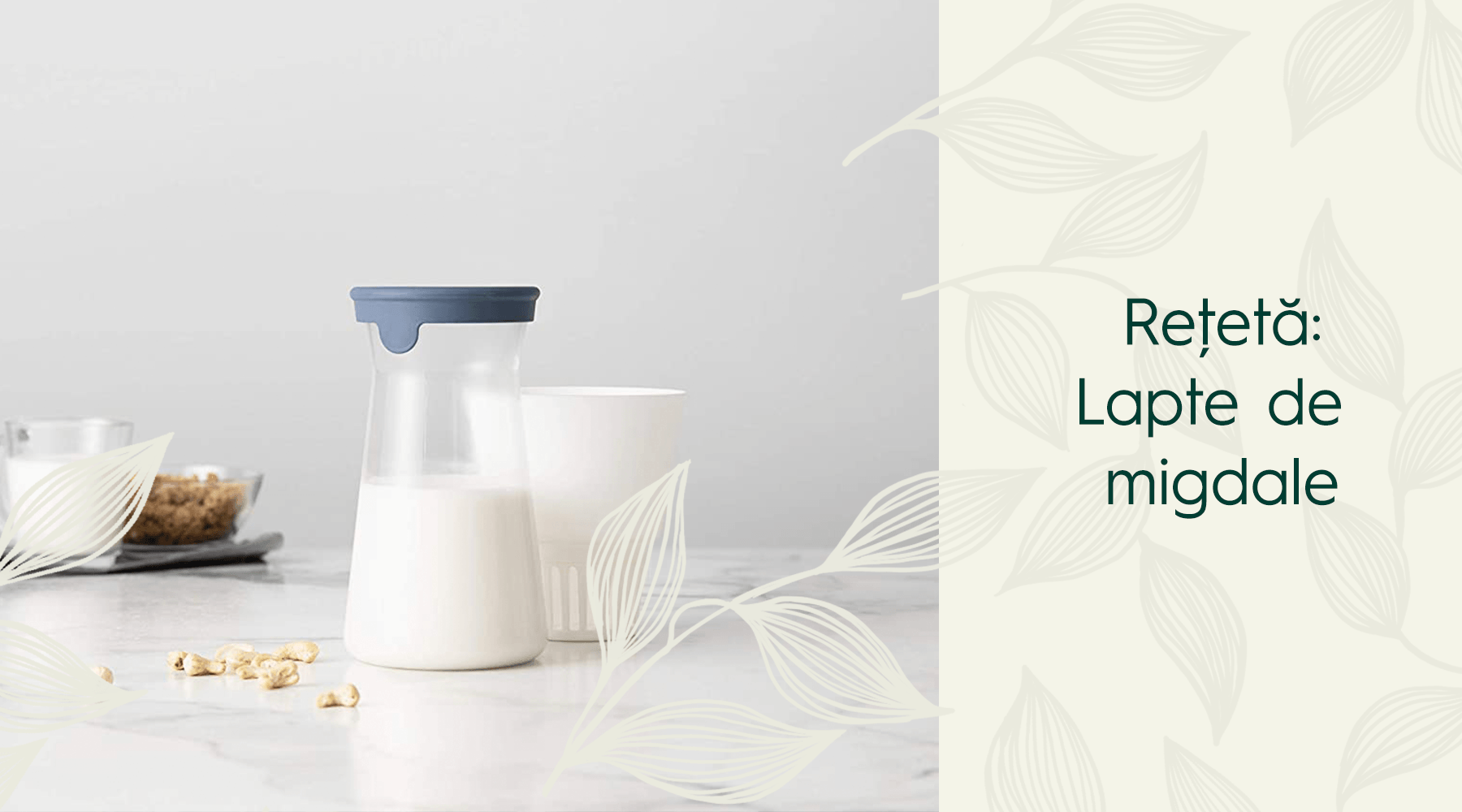
Devoid of animal fats and rich in nutrients, plant milk is the best alternative to animal milk. Additionally, plant milk contains no lactose, saturated fats, or cholesterol. Unlike milk of animal origin, plant milk does not contain casein, animal fats, or lactose, but rather unsaturated vegetable fats.
Almond milk is the tastiest and most flavorful alternative to cow's milk and is an option for people who are allergic to soy, or rather soy milk. It is rich in many essential nutrients for the body – magnesium, potassium, calcium, iron, fiber, phosphorus, vitamin E, etc.
It contains even more antioxidants than cow's milk. It mimics the density and color of cow's milk very well and contains protein, vitamins, and minerals. A glass of almond milk provides 30% calcium and 25% Vitamin D of the Daily Recommended Intake. It has a low glycemic index and, of all types of plant milk, contains the fewest calories. Almond milk can be easily made in your own kitchen or bought in supermarkets and organic stores.

If for various reasons you have decided to stop consuming dairy products, almond milk will become a staple in your kitchen. It is very versatile and can be drunk as is or sweetened, turned into yogurt, fermented sauce for salads, raw pudding, a base for smoothies or soups, or in various raw desserts.
Homemade Almond Milk
The almond milk recipe is very simple, has a 100% success rate, and is low-cost. It's extremely easy and quick to prepare, and you can give it the taste you desire: sweeter, more concentrated, with or without flavorings.
1. To make milk, you need 150 g raw almonds, preferably organic, water, and a pinch of salt. Optionally, vanilla extract, 1 date, and natural sweeteners – honey, maple syrup, or agave syrup.
2. Soak the almonds overnight in a bowl covered with cold water. The almonds will swell as they absorb water. Leave them in the kitchen, covered with a cloth, overnight. The better the almonds macerate, the creamier the almond milk will be.
3. After the almonds have swollen, drain them and rinse them under cold running water. At this point, the almonds should feel slightly spongy between your fingers. It's best to discard the soaking water, as it contains phytic acid, which inhibits the body's ability to absorb nutrients.

4. Optionally, if you have time and patience, you can try to peel them.
5. Place the almonds in a blender along with 750 ml of water, a little vanilla extract, a dried date, and sweetener to taste. Blend for 3 minutes, first intermittently to break up the almonds, then constantly, until the almonds are very finely ground, as uniformly as possible.
6. The almonds should be crushed into a very fine mass, and the water should be white and opaque. Strain the milk through a sieve, and after all the milk has drained, lift the cheesecloth and squeeze out the remaining milk from the almond pulp.
7. Taste the resulting milk and add, if desired, natural sweeteners to taste.
TIPS: What can you do with the leftover almond pulp and how can you make more delicious almond milk?
- The almond pulp remaining after straining the milk can be dried in the oven and used to make cakes.
- To get concentrated milk, use the same amount of water and almonds (one cup of almonds to one cup of water). However, the milk will also be delicious when you use 2-3 parts water to one part almonds.
You can use almond milk for your breakfast cereals, coffee, pancakes, cakes, or any other dishes that require milk.
You can also use almond milk (1 cup almond milk) in a smoothie, along with 1 small ripe banana or other fruits, such as strawberries.
If you don't have time or find it too complicated, you can especially use the commercial almond milk varieties. Some plant milk brands contain many harmful additives, and you won't necessarily have a healthier diet if you consume them instead of cow's milk. Yes, they are lactose-free, which is particularly useful for people who are intolerant to this substance, but it's best to read the label of the product you buy to ensure it's of good quality.
By the way, we have a device we recommend for preparing and storing almond milk, which you can find here.


Share:
History of scales
The Most Popular Spices in the World