

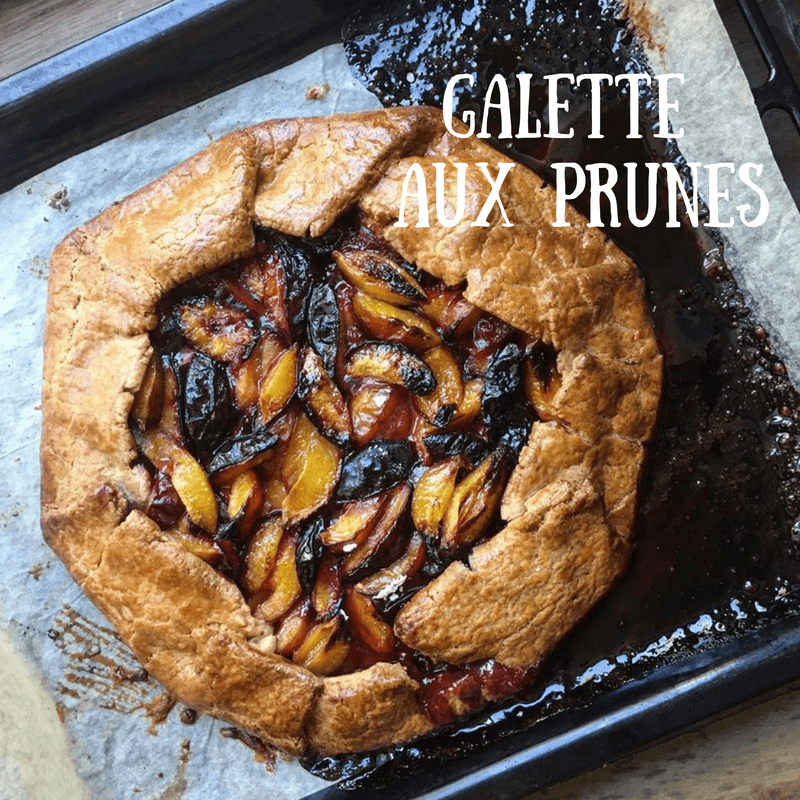
What could be simpler than a roughly shaped rustic tart? You'll need to know how to roll out dough - otherwise, the tart is quite forgiving.
Shortcrust pastry or pâte brisée - as the French say
Many believe that a delicate and flaky tart crust is the privilege of professional chefs. Perhaps this is due to the risk of overworking the dough and turning it into something that breaks in two or tastes heavy rather than light. Like pasta dough, shortcrust pastry is a simple dough containing flour and water, but in which butter is a key element, playing the most important role in creating a crumbly texture. Achieving the exact butter-to-flour ratio is crucial, as are using very cold ingredients and a light hand.
Ingredients
- 350g all-purpose flour (I used buckwheat flour)
- 1 tablespoon sugar
- 1 1/2 teaspoons coarse salt
- 227 grams butter (cut into 2 cm cubes)
- 7 tablespoons very cold water (as needed)
Method of preparation
- Combine the dry ingredients and put them in a food processor, then add the butter - pulse in short bursts until pea-sized crumbs form.
- Gradually add the water and continue to pulse in short bursts. The dough should not be sticky.
- Turn the dough out onto a clean work surface. Knead it once or twice to incorporate any disparate pieces. Wrap the dough tightly in plastic wrap and refrigerate for at least 1 hour (or overnight). The dough can be frozen for up to one month and thawed overnight in the refrigerator.
- Roll out the dough into a 35 cm disc.
How to roll out shortcrust pastry
Low temperature is extremely important so that the butter does not melt.
- Remove the dough from the refrigerator and let it sit for 10 minutes (otherwise it will crack).
- Roll out the dough on a lightly floured surface or on a piece of parchment paper dusted with flour (the second option makes it easier to transfer to the baking sheet).
- If it becomes too soft to work with, place it in the refrigerator for about 10 minutes.
- Start rolling the dough from the center outwards and avoid pressing directly on the edges.
- As you roll, run your fingers over the dough to check if it's evenly rolled.
- Refrigerate the dough for another 15 minutes.


For the filling
- 780g ripe but firm plums
- 2 tablespoons lemon juice
- 75g granulated sugar
- 1 tablespoon cornstarch (or 2 tablespoons all-purpose flour)
- 1/2 teaspoon coarse salt
For finishing
- 1 egg or 1 egg yolk
- 1 tablespoon sour cream or heavy cream
- fine granulated sugar for dusting
Method of preparation
- Preheat the oven to 190 C and cut the fruit.
- Place all filling ingredients in a bowl and mix with a spatula.
- Remove the dough from the refrigerator and arrange the fruit in the center of the sheet, leaving a 3-4 cm uncovered edge.
- Beat the egg or egg yolk with the cream and sprinkle generously with sugar.
- Bake for about 1 1/4 hours until the filling bubbles in the middle and the crust is a deep golden brown. It is very important that the juice boils, otherwise the starch will not thicken it. If a lot of juice has leaked from the galette, slide a spatula underneath to detach it from the sheet and transfer it to a wire rack to cool.
The galette is best on the day it is made.
Bon Appétit!




Share:
Roasted Tomatoes with Oriental Flavors
Charlotte Malakoff