

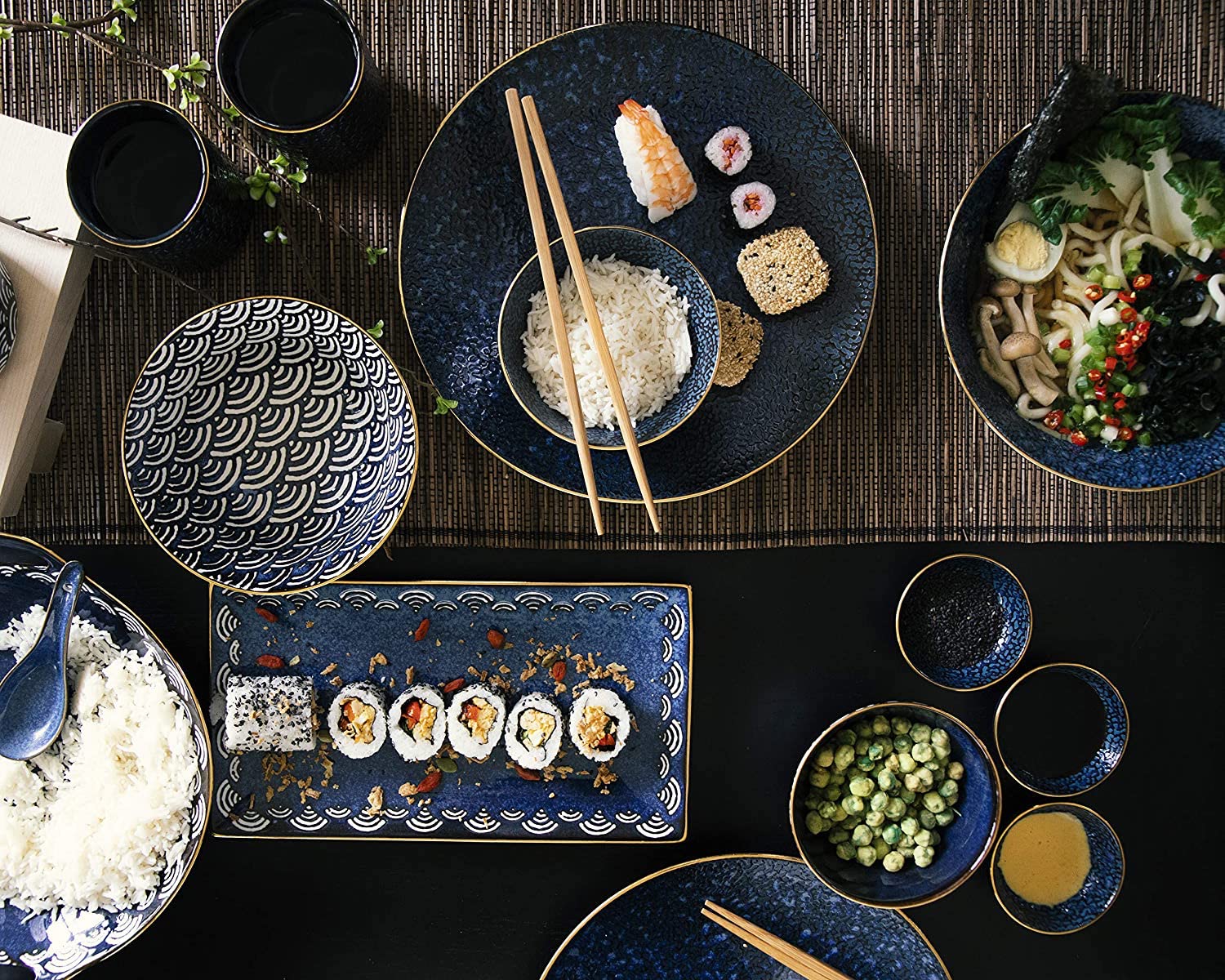
The general perception is that sushi is a luxury dish. However, sushi was once a popular food for people at the bottom of the social pyramid and, despite today's complex gastronomic ritual, it was served in bamboo bowls or on a burdock leaf at the street corner.
The history of this dish, composed mainly of fish and vinegar-flavored rice, is very interesting, especially since it was successfully used for a long time to feed the crowded streets of Tokyo. For the first time, the recipe is mentioned in the 2nd century AD, but not in Japan, but in Southeast Asia (somewhere in the Mekong River area). And not as a dish, but as a method of preserving fish and meat. The recipe was simple: a layer of rice was placed over fish or pieces of meat. Everything was left to ferment for several months, after which the rice was discarded and the meat was consumed.
This preservation method reached Japan in the 7th century, specifically in Edo Bay (today's Tokyo). The dish was, without a doubt, if not the first form of fast food, at least among the first to satisfy the hunger of workers crowding the streets of Edo.
Later, in the 10th century, the Japanese began to eviscerate fish, wash it with sake, and fill it with uncooked rice before preserving it. After fermentation, the rice was removed and only the fish was eaten.
One hundred years later, the Japanese sought a method to reduce the pungent odor emanating from this dish and began to add vinegar to highlight the spicy flavor and to consume the fish faster.
In the 19th century, a major change occurred in the presentation of the dish: rice was no longer added to the fish, but the fish slice (sashimi) was placed on seasoned rice, sometimes rolled around a rice core. The dish transformed into a true culinary experience and migrated from the streets and the menu of ordinary people directly onto the plates of Westerners. The transition was not easy, especially since Westerners were reluctantly convinced to swallow raw fish due to fear of parasites, which added to the fear of potential toxins in fish caught in polluted areas. Nevertheless, there are currently hundreds of different recipes, varying only in garnish, presentation, and sauces.

The contemporary version of sushi was created in the 19th century, at the end of the Edo period (1603-1868), and was invented by Hanaya Yohei, who even had a shop called Yohei-zushi, where he sold the new type of sushi of that period, Nigiri-sushi. It is a version that does not involve fermentation, so it can be prepared on the spot. Seafood or exotic fruits are essential to the current sushi recipe. It is usually eaten with different sauces (soy sauce being by far the preferred one) or seasoned with wasabi, a spicy paste made from grated Wasabia japonica root. Portions are garnished with grated white radishes, burdocks or thin slices of vegetables (cucumbers or carrots) cut in the shape of flowers. Sweet ginger (gari) is eaten as an appetizer, to cleanse the palate and create the necessary papillary contrast for tasting new types of sushi.
Discover the Satori by Mikasa collection, which supports and offers assistance for the most special sushi recipes prepared or served at home. Discover here



Share:
The Most Popular Spices in the World
The history of the baguette – a symbol of France