

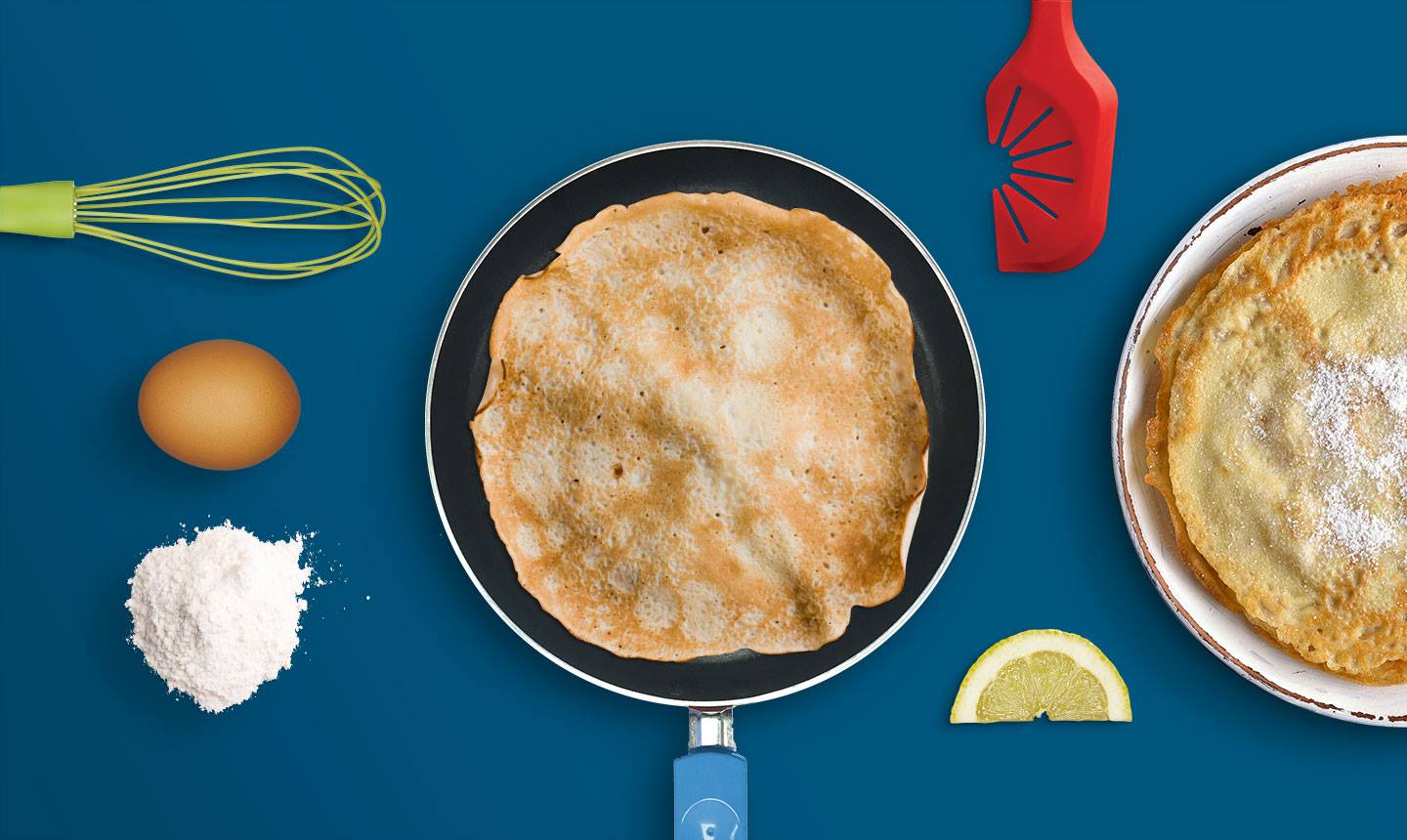
Pancakes are among the few dishes that the master gourmets of Ancient Greece should be proud of, because they have stood the test of time (and what a test!), even making their way into 21st-century cuisine.
If we were to translate the original (i.e., Greek) name of the pancake, we would call it "fried in a pan," because the Athenians also called it "tagenites," "teganites," or "tagenias" (all variants being derivations of the word "tegano" which designated the frying pan).
The chronicler Athenaeus recounts how this dessert was prepared: the plakous (a mixture consisting of 500 gr. of flour, 60 ml of white wine, 60 ml of sour milk, half a teaspoon of salt) was fried in a small amount of olive oil. After the mixture started to bubble and was browned on both sides, it was served warm in the morning. It was always seasoned with honey and sesame seeds, sometimes with cheese.
Old relatives of bread, flatbread, and even pizza crust, pancakes have spread all over the world, often changing either their composition or appearance. In America, the pancake batter also contains baking powder and is fried in a fluffier and thicker form; in Asia, the thickness varies from one area to another, but it is filled almost everywhere with savory ingredients (cheese, meat, vegetables); in Africa, on the other hand, pancakes are a base for various sauces and hummuses; Germanic peoples consume them both as a dessert and as a soft base over which various savory toppings are placed, while Latin-descended Europeans preserve the purpose, recipe, and appearance of the pancakes made by the Greeks in antiquity.
One of the most unusual pancake recipes was born during the Austro-Hungarian Empire and bears a name that brings to mind the rulers of those times: kaiserschmarrn. The "Emperor's crumbs" were first prepared for Franz Joseph I (1830-1916), and as soon as you see the result, you realize how aptly named the dessert is – torn strips of pancakes (made from flour, eggs, milk), caramelized, mixed with jam and crushed hazelnuts. The Emperor's wife, Elisabeth of Bavaria (better known as Sisi), being concerned about her figure, had ordered the cooks to make her only light desserts that wouldn't make her gain weight. Upon seeing the "caloric bomb," the empress refused to eat the pancakes prepared in this way. Exasperated, her husband is said to have exclaimed before eating both his and his consort's portion: "Let's see what crumbs (schmarrn) the cook has made!".
The first information regarding the appearance of pancakes in Russian culture refers to the year 1005, when they were prepared with yeast.
According to one version, Russian pancakes (bliny) became a symbol of the Maslenitsa holiday, associated with the end of winter. According to another version: the golden color of the pancakes and their round shape are similar to the image of the spring sun, which is why they symbolize the main pagan deity - Yarilo, whom the Slavs worshipped until Christianization.
Pancake festivals around the world
In France, on the other hand, Pancake Day is celebrated. The holiday takes place on February 2nd, the Feast of the Purification of the Virgin Mary. However, it has become known as Pancake Day, because tradition dictates that such dishes be served. Superstition says that the person who manages to toss a pancake in the air and catch it with their right hand in the pan, while holding a gold coin in their left, will have luck and prosperity all year.
And in England, a pancake festival is also organized: Shrove Tuesday, also known as Pancake Tuesday.
The most expensive pancakes
Also in England, this time in Manchester, some of the world's most expensive pancakes are sold. They cost around $1330 and are prepared with lobster, caviar, truffles, and Hollandaise sauce – in the preparation of which one of the world's most expensive champagnes, Dom Perignon, is used. The recipe was created by the luxury restaurant Opus.
Dubai far surpasses this achievement. A single pancake, served in one of the luxury restaurants in this eccentric city, sells for €25,000. It is sprinkled with edible gold.
Pancake records
Sean McGinlay and Natalie King, two chefs from Glasgow, built the world's tallest pancake stack. It measured no less than 75 centimeters. For this achievement, they worked no less than 22 hours and used 100 eggs, over 10 liters of milk, 5 kilograms of flour, and 3 kilograms of butter. And the record for the highest pancake toss is 9.47 meters and was set in 2010 in New York.
Pancakes are also our passion at Eclair, which is why we have a range of products that help you prepare delicious pancakes from the first to the last.
Discover pancake products here


Share:
French Cheeses: How to Distinguish Them and Their History
Spring table and Maslenitsa