

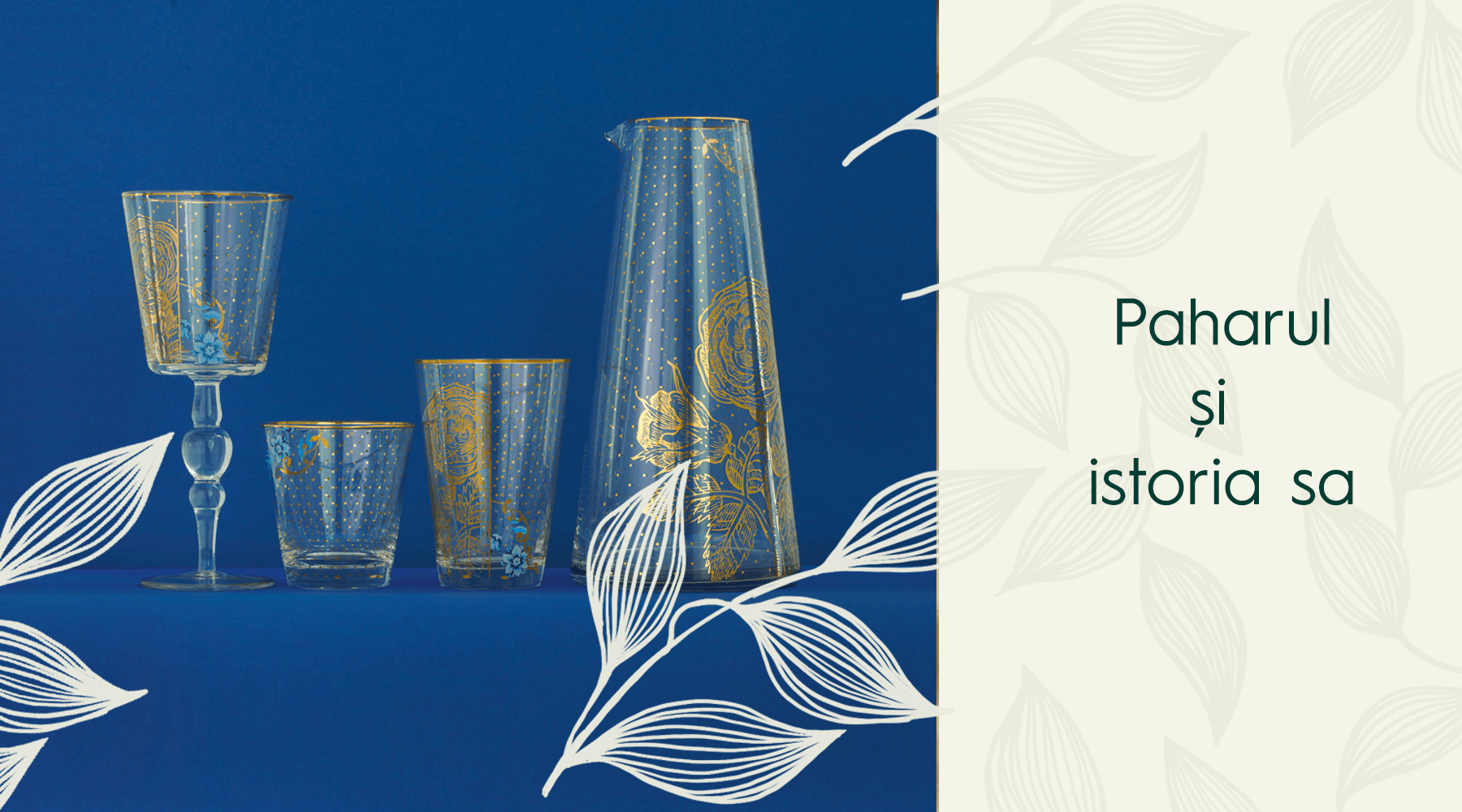
Blown glass appeared in Syria as early as the 1st century BC. During the Roman Empire, only very wealthy people enjoyed using glass cups. Starting in the 15th century, with the appearance of "Murano crystals," glasses began to be stylized, taking on various shapes and external decorations. A little later, "Bohemian crystal" appeared, which, unlike Murano crystal, had various "cut" designs on its exterior surface. "Bohemian crystal" was of superior quality to "Murano crystal," posing significant competition. "Modern-day crystal," however, emerged in London in the 16th century, truly dominating the glassware and crystalware market. Jealous of the English success, Louis XV approved the founding of the Baccarat and Royal Saint-Louis crystal works. French crystals are recognized as the most beautiful and elegant products in the world. During the time of Louis XIV, with the so-called "poisoning" scandal, stemmed glasses appeared. They were made to oblige servants to present them to their masters by holding only the stem, without touching the bowls. Beginning in the 19th century, the use of glasses and various glass receptacles became democratized. Glasses, carafes, bottles, jars, etc., were found in every home.

There is a wide variety of glasses. They differ due to specific uses, as well as their shapes and the material they are made from. Commercially available glasses include those for white wine, red wine, champagne coupes or flutes, water glasses, beer glasses, cognac glasses (large or small models), port glasses, whiskey glasses, cocktail glasses, etc. For the elegance of a table and to give it "character," it is preferable that the glasses belong to the same set and be made of crystal or very good quality glass. To give character to a table, we can use colored glasses of good quality, in harmony with the decoration used.
Glasses are placed in front of the plate from left to right, depending on the wines served. Their order is decreasing. First, the water glass, the middle one is for red wine, and the smallest glass for white wine. The white wine glass can be taken as a reference, placed near the knife. Glasses are used from right to left (white wine, red wine, water). The champagne glass (coupe or flute) is placed according to when it will be served. If served at the beginning, it is placed to the right of the glass alignment, but if served at the end, to the left. At official dinners and large receptions, the champagne coupe or glass is placed to the left of the water glass, but slightly set back – towards the center of the table. It is preferable that the glasses belong to the same set. Glasses for beer, orangeade, liqueur, whiskey, cognac, etc., may belong to other sets than those on the table.

Drinks like "long drinks" are served in whiskey glasses; "short drinks" in cocktail glasses; "hot drinks" in punch glasses; etc.
If you serve only one type of wine from the beginning to the end of the meal, you will arrange one wine glass and one water glass on the table, in the same order.

Stemmed glasses are held by the "stem" to avoid warming the drink and to prevent leaving fingerprints on the bowl. Of course, one drinks without noise and without showing excessive satisfaction. A raised pinky finger is considered childish and inappropriate.
If you place the dessert cutlery on the table from the beginning, shift the glasses to the right. They should still be arranged in descending order from left to right (water - wine).

The water carafe has a flared top and can be placed on the table. The wine carafe, made of glass or crystal, has a flared body and a thin neck. It is closed with a stopper made of the same material and is kept on the table. All of these are part of the many rules of "Savoir-vivre."
Discover the collection of glasses from different corners of the world, at Eclair: click here



Share:
Coffee: where it comes from and why we love it so much
Brunch: the meal from breakfast to dinner