

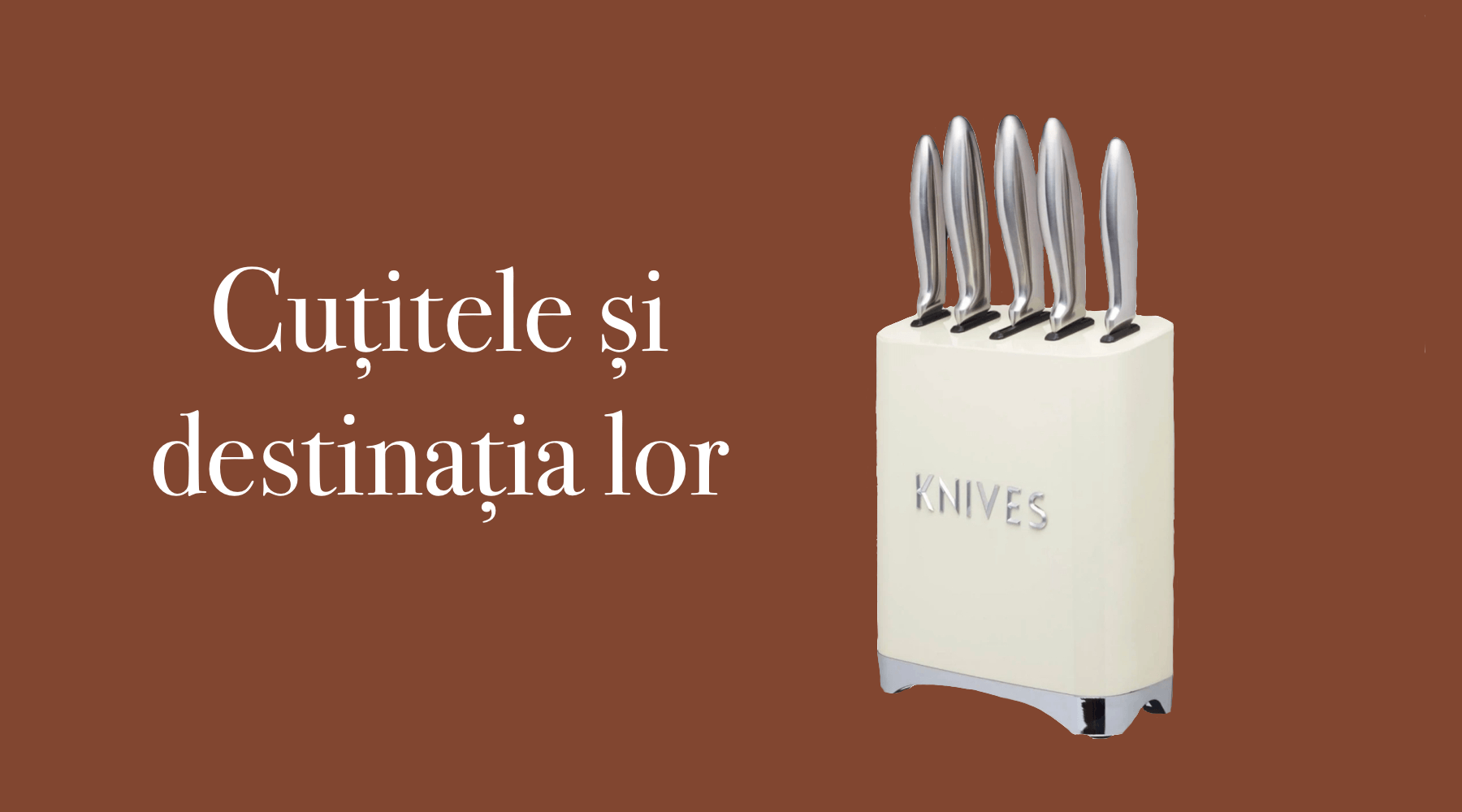
One of the most important items for every kitchen remains a good, quality knife that will always make the job easier. By always using a sufficiently sharp knife that has the correct weight and balance, you will ensure that preparation is faster and safer. For those who have used a good quality kitchen knife, the idea of returning to less performing versions will be unimaginable.
If you feel it's time to upgrade to a better quality kitchen knife or replace one that has seen better days, there's a lot to consider to make the right choice. The kitchen knife buyer's guide can help you understand what to look for in a quality knife and identify the best knife for your needs.
Types of kitchen knives
Different types of knives are designed to work best for certain types of food preparation activities. A large knife can completely hinder you if you try to use it for something it's not suited for. The first step in buying the right knives for your kitchen is to understand the available types and which ones are most important to add to your collection.
1. Chef's knife
The most important knife for most cooks is the chef's knife. This is the knife you use most frequently to cut vegetables and most types of meat dishes, and the one you'll see used most often on TV shows or in restaurants by head chefs. It has a large, smooth blade that can be used for crushing items when needed (such as garlic and olives), as well as slicing and chopping almost everything you need to cut in a kitchen. If you're just starting out and only want to buy one knife, then the chef's knife is probably the most important one to begin with.

2. Paring knife
Paring knives are smaller and shorter than chef's knives and make delicate cutting tasks for smaller food items easier and safer. They are typically used for cutting small fruits and vegetables, as well as for any peeling operations you would do with a knife (although a proper peeler often works better for this task).
3. Serrated knife
Serrated knives are the third type of knife that most cooks will find essential. They have long, thin blades, serrated along their entire length, to make cutting bread easier. A serrated knife will prevent you from tearing or squashing bread as you cut it and is often the best choice for softer fruits and vegetables, such as tomatoes. This category of knives is quite affordable, and it's often not worth spending more for superior quality, as the blades cannot be easily sharpened and you'll most likely have to replace them when the blade loses its sharpness.

4. Santoku knife
A Santoku knife is used for the same types of tasks as a chef's knife but has a slightly different design. The blade is wider and straighter, and some cooks prefer it for cutting vegetables and mincing herbs. The knife's design makes it easier to achieve thin slices of vegetables.

5. Slicing knife
The slicing knife has a long, thin blade with a pointed tip. This knife ranges from 20-40 cm in length, allowing you to easily cut large pieces of meat into smaller, narrower pieces that are easier to serve. The slicing knife is a type of knife specifically designed for this specific task. It is not an essential component for every kitchen. However, if you find yourself frequently preparing roasts, then this knife can be truly useful. If you want to buy a slicing knife, it is recommended to choose the longest version that your budget allows.

6. Boning knife
This is another specialty knife that only a few cooks will feel the need to own. If you are a hunter or want to save money by purchasing meat that needs further butchering, this is a knife that can handle the removal of bones, tendons, and ligaments as easily as possible. They typically have a blade of about 11 to 16 centimeters in length. A unique feature of this type of knife is that they are available in different degrees of flexibility. If you are preparing a large amount of meat and pieces with large, long bones, then you will want a more rigid blade. If you are preparing more delicate cuts of meat and bones that are more complicated to clean, then a more flexible boning knife may be the best choice for you.
7. Fillet knife
A fillet knife is a type of boning knife that is a good choice for anyone who cooks fish frequently. This is another kitchen knife considered optional. While very similar to a boning knife, a fillet knife will have a longer, thinner, sharper, and more flexible blade to allow for better performance when filleting fish.
Factors to consider when buying a kitchen knife

Identifying the types of knives you need in your kitchen is one of the most important parts of the process, but there are a number of other factors to consider when finding the right knives.
Cost
If you cook a lot and will use the knives you buy frequently, then it's probably worth spending some money to get the right knife for you, at least for certain types of knives. When it comes to a good chef's knife or Santoku knife, finding a quality blade that stays sharp, is well-built, and lasts, is worth the cost. For many of the other types of knives, it's probably not as important to spend a lot of money, as you won't use them as frequently.
Construction
There are two main ways knives are made: forged and stamped.
- Forged knives - These are created by applying extreme heat to a piece of steel, which is then shaped into the desired form. They are generally considered high-quality and cost more than stamped knives. The forging process creates a strong blade that is less prone to bending over time.
- Stamped knives - These are made with a machine by stamping them out of a piece of steel. The edge is sharpened after the blade is formed, and the knife has the same thickness throughout its length. While these are generally not considered to be of the same quality as forged knives, there are many stamped knives that are extremely good.
If you choose a forged knife, you should expect to sharpen them more often, and thus you might need to replace them sooner.
Sharpness
A dull knife will never serve you well. The best kitchen knives come sharp and stay sharp for long periods. One of the main indicators of a knife's quality is therefore how sharp it is and how often it needs additional sharpening. A sharp blade not only determines how well the knife works but also influences how safe it is to use. While you might think that a sharper knife carries more risk, the truth is actually the opposite. Yes, you can do some real damage if you cut yourself with a super-sharp knife, but you are much more likely to cut yourself while struggling to cut something with a dull blade and forcing the blade, risking losing control of the knife.
Weight
A large part of the equation in finding the right knife, especially when it comes to a chef's knife or a Santoku knife, is how comfortable you find it to use. And the weight of the knife accounts for a large part of that. There is no general "correct" weight to look for when it comes to kitchen knives; this is truly a factor related to personal preference. Some cooks will find a light knife easy to use, while others will appreciate the weight of a heavier one and feel like they have more control over it. You'll need to do a bit of experimenting to see what works for you. If you don't have much experience with different types of chef's knives, try those of friends to get a feel for how they work. And if you offer to cook for them in return, they'll probably accept right away.
Balance
The balance of the knife goes hand in hand with its weight to determine how comfortable you will find the knife to use. If the weight differs too much on one side or the other, then proper cutting will be more difficult to achieve. This is another factor that is hard to judge for a knife without the chance to hold it in your hand.
Handle comfort
The final factor that makes a big difference in how comfortable a particular knife is to use is the handle. Part of this factor largely depends on the material used – wood, plastic, metal, and composites are the most common options. The other parts are its shape and weight. You probably won't be surprised to learn that this is another subjective choice. What is comfortable for you will depend on the size, strength, and shape of your hands, as well as personal preference for a particular material.
Ease of use
Many of the categories above play an important role in ease of use. A sharp knife will make things easier to cut, and a comfortable feel in the hand will make use more pleasant and efficient. Make sure you use the right knife for the right job, because it's important not to make your work harder. A whole variety of knife styles exist precisely to help you choose correctly for the variety of cutting tasks you perform in a kitchen.
Material
Most kitchen knives you'll encounter will be made of stainless steel, which is strong, durable, and easy to sharpen.
Some high-end knives use carbon steel instead, which is stronger and more robust but less durable. With these, you'll be more likely to deal with rust and stains, especially if you're not in the habit of cleaning and drying the knife immediately after each use.
Another option is high-carbon stainless steel, which falls somewhere between the other two: it's a bit stronger than stainless steel but more durable than carbon steel.
While not as common as any of the steel options, some brands offer ceramic knives. These are very sharp, while also being lighter than metal. They stay sharp for a long time, but once the blades start to become dull, you'll need to send them to a professional for sharpening, rather than sharpening them at home.
Storage
Any new item you buy for the kitchen needs to be stored somewhere, and for someone who cooks frequently, you probably already have many items taking up storage space. Before buying new kitchen knives, consider the space in your kitchen where they will be kept. You can buy entire sets of knives that include a block that you will keep on the kitchen counter, but these will not give you the option to choose each knife according to your specific preferences, and you will have to settle for what is in that set. However, if you opt for a quality set, a block will greatly reduce your storage space, the knives will be individually protected, and in addition, they will look extremely good.
Some knives come with a sheath that you will use when storing it to protect the blade from hitting other items in the kitchen. These sheaths can also be purchased separately depending on the size of the knife.
A trick for storing multiple knives without taking up too much space is a magnetic knife holder. You can find a wide variety available, all in different styles and materials. Storing knives with a magnetic wall holder is actually a better option because they won't knock against other gadgets and cutlery stored in the same drawer.
Maintenance – rust, corrosion, re-sharpening
An additional factor to consider when deciding to buy a knife is maintenance. Some knives are more prone to rust or corrosion than others, so if you're not someone who tends to hand-wash and dry things, then you might want to look for a knife less susceptible to corrosion. Additionally, many types of knives will require occasional sharpening. If this is the kind of chore you want to avoid, then choose a knife known for staying sharp longer.
We invite you to discover knives and their care accessories, at Eclair, here.


Share:
The Story of the Christmas Tree: Histories and Traditions from Different Cultures
French Cheeses: How to Distinguish Them and Their History