
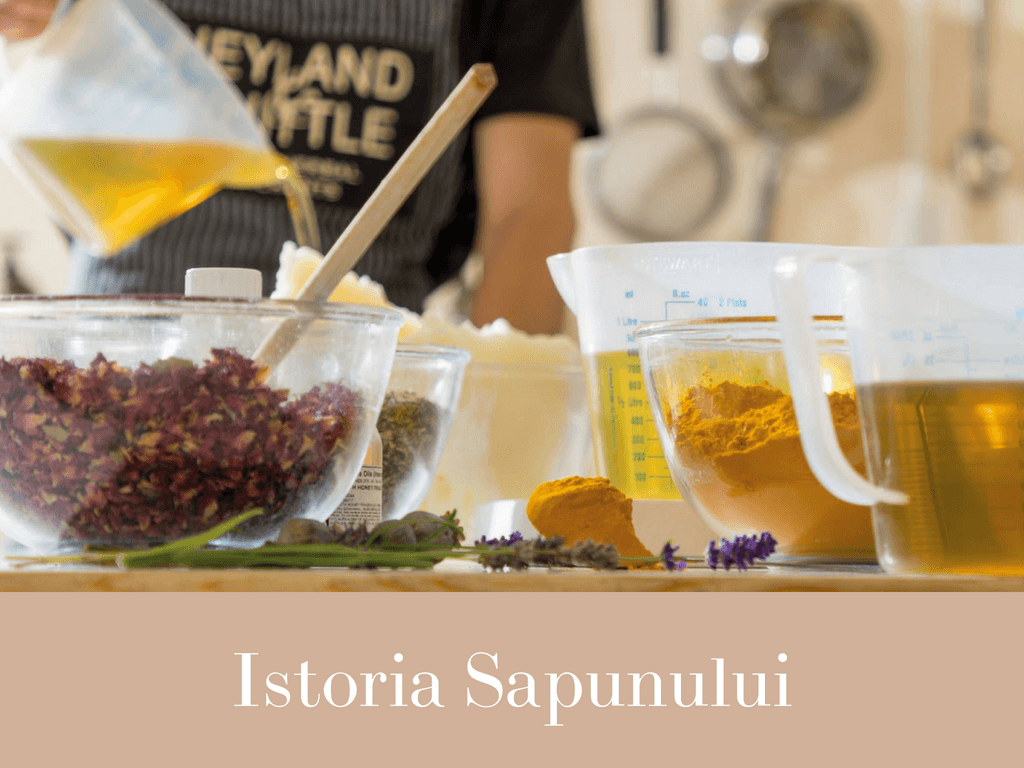
What would our lives be like without hygiene? Today we can no longer imagine it! Every day we apply creams, we wash our hands for purification, often without realizing that we are doing more harm than good. We believe in progress but we are starting to return more and more often to our origins, to classic, natural products that connect us with nature.


When we like a product, we start with its history and origin. Let's see how soap came about.
The oldest documentary evidence of soap making dates back to 2800 BC and comes from ancient Babylon. An inscribed clay cylinder was found with details about boiling fat and ash, and it contained a substance similar to soap. Egyptians used soap made from oils and certain alkaline salts for washing and treating some skin diseases. Legend has it that the name soap comes from the place called Mount Sapo in ancient Rome, where fat from animal sacrifices mixed with ash and flowed into the river when it rained.

The English began producing soaps in the 12th century; already in 1633, King Charles I granted the Society of Soap Makers of Westminster a 14-year monopoly in the kingdom. During the Tudor period, wealthy women used soap for daily hygiene, and these products were made from imported olive oil, which was very expensive. There were also mass-available soap recipe instructions, suggesting that various social classes were interested in hygiene at that time.

During the reign of Queen Elizabeth I, soap consumption in England was higher than in any other European country. She introduced the fashion of bathing every 4 weeks, even if it wasn't strictly necessary.


Although the chemical industry has advanced and offers consumers cheaper soaps with intense aromas, produced from parabens and sulfates, which can even stimulate breast cancer, organic soaps maintain their position in their segment. A premium product is usually made from olive oil, essential oils, natural herbs, and spices.
Here you can find artisan soaps made with great care using old, traditional methods in the Sussex region of Great Britain. Each soap is decorated, cut, and packaged by hand.




Share:
The Culture of the Picnic in the Romantic Era
Say NO to Plastic!